Published perspective
 Published perspective
Healthy buildings are an operating standard
A co-authored FSAI Journal perspective on health, safety, visible data, and everyday operating culture in commercial real estate.
Read the FSAI Journal article ↗Professional Journey · Commercial Real-Estate & Full Building-Operations Leadership
My work sits between the boardroom, the plant room, the service corridor, and the everyday experience of the people using the building.
I bring hard and soft services, teams and service partners, tenant experience, commercial accountability, readiness, fit-outs, handovers, compliance, CAPEX and OPEX, and practical digital tools into one operating picture.
Professional signals
These signals show the connection between full building operations, commercial responsibility, people leadership, readiness, and practical operating systems.
A co-authored FSAI Journal perspective on health, safety, visible data, and everyday operating culture in commercial real estate.
Read the FSAI Journal article ↗A public framework connecting people, systems, SOPs, service partners, escalation, and review before daily operations begin.
Open the readiness frameworkThe journey below shows how my responsibility widened from field engineering to people leadership, scaled operations, commercial stewardship, and portfolio readiness.
See the responsibility spine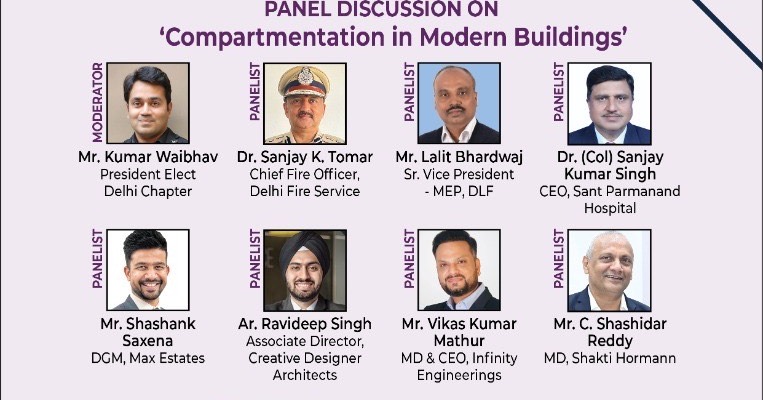
I was an invited panelist for the FSAI Delhi Chapter discussion on “Compartmentation in Modern Buildings” at Scope Convention Centre, New Delhi, on 24 April 2026. We discussed how safety responsibilities continue after handover through tenant fit-outs, maintenance and clear ownership.
OPEN BRIEFING TABLE
A map of how my responsibility widened from field ownership to full-service, commercial, systems, and portfolio-readiness leadership.
Hard and soft services, engineering reliability, housekeeping, security, parking, fire and life safety, compliance, fit-outs, handovers, and daily service delivery.
P&L-led operations, operating budgets, CAPEX and OPEX, billing and collections, cost control, leasing and marketing support, and ancillary revenue.
Teams, service partners, training, SOPs, work permits, visitor management, feedback, action tracking, and useful digital assets and tools.
DLF
GroundI learned operations close to the ground, where technical reliability, customers, authorities, contractors, and commercial reality meet every day.
I worked across sold properties and automated parking operations, coordinated with public authorities, prepared service agreements, supported retail operations, and saw how common areas and event spaces could support both experience and revenue.
I developed a practical operating discipline around service delivery, customer issues, contractor accountability, CAM thinking, leasing and marketing support, and ancillary monetisation.
A building is a technical asset, a service environment, and a business at the same time.
Bharti Realty
PeopleMy scope expanded from technical delivery to the full rhythm of commercial assets: people, partners, customers, budgets, contracts, fit-outs, and daily experience.
Commercial and mixed-use assets needed hard services, soft services, housekeeping, security, parking, vendor governance, tenant coordination, fit-outs, billing, collections, compliance, and cross-functional closure to move together.
I led large teams and service partners, shaped OPEX and CAPEX plans, negotiated commercial terms and SLAs, supported leasing and marketing, improved customer experience, and kept cost, revenue, service, and risk in one review rhythm.
Operations becomes leadership when service quality and commercial accountability are carried together.
Brookfield Properties
SystemAt campus scale, dependable operations could not rely on memory or individual heroics. The work needed visible ownership and repeatable systems.
Large office environments brought more teams, tenants, contractors, assets, approvals, service requests, and operating data into the same day.
I strengthened SOPs, audits, planned maintenance, action dashboards, complaint workflows, service reviews, ERP migration, and a practical One App roadmap for training, work permits, visitor management, feedback, and action tracking.
Digital tools earn their place when they help operating teams see, decide, and follow through.
Max Estates Limited
ReadinessAs Deputy General Manager, Building Operations (Engineering Excellence), I now connect live-asset reliability with the decisions that shape future operations.
Since June 2025, my mandate covers Max Towers, Max House, Max Square, residential operations-readiness, and direct operational requirements for 222 Rajpur.
I lead technical operations, review design from an operating lens, shape maintainability and service routes, prepare pre-opening and common-area budgets, develop handover and usage manuals, define team capability, and coordinate digital-infrastructure inputs.
The best time to improve operations is before the operating team inherits the building.
Selected operating stories
The focus is not one isolated system. It is the operating relationship between the building, the people who run it, the people who use it, and the business it supports.
Hard services, soft services, housekeeping, security, parking, customer requests, vendors, and compliance can easily become separate conversations.
I bring them into one review rhythm with clear owners, service levels, escalation, training, and action closure, while keeping the occupant experience visible.
Teams and partners can coordinate around the whole building instead of optimising one service in isolation.
The user experiences one building, so the operating team must learn to manage one connected system.
Service quality, cost, collections, occupancy support, fit-outs, and ancillary opportunities all affect the commercial performance of an asset.
I connect budgets, CAPEX and OPEX, vendor commercials, billing and collections, tenant needs, leasing and marketing support, and monetisation opportunities with operating decisions.
Commercial accountability stays inside the operating conversation rather than arriving only after service decisions are made.
Good operations protects experience today and asset value over time.
Training, permits, visitors, feedback, complaints, documents, and action items become fragile when they live in disconnected files and informal channels.
I use ERP workflows, dashboards, digital assets, online training, work permits, visitor management, feedback, and action tracking to make work easier to see and govern.
Teams gain a clearer record of ownership, status, and the next action without replacing field judgement.
Technology should reduce operating friction, not create another system that the team has to operate around.
Leadership principles
The aim is not more process for its own sake. It is dependable service, clear ownership, commercial discipline, capable teams, and fewer avoidable surprises.
Hard services, soft services, people, partners, experience, compliance, cost, and revenue belong in one operating picture.
P&L, budgets, CAPEX, OPEX, collections, leasing support, and ancillary revenue should inform daily operating choices.
Maintainability, access, safety, service routes, operating manuals, teams, and budgets must be considered before handover.
Training, permits, visitor systems, feedback, dashboards, and action tracking are useful only when teams can adopt and sustain them.
Future fit
The strongest fit is where a commercial real-estate business needs a leader who can hold full building operations, customer experience, and commercial performance together.
Continue
Continue to the existing AI Orchestration route, or start a specific professional conversation.
 Working framework
 Professional record